
Dugtong-ahas PRODUCT NAME
Parameria philippinensis Radlk. SCIENTIFIC NAME
| Common Name: | Dugtong-Ahas |
| Local Name: | Dugtong-ahas, Tagulauai (Rizal); Ikding-nga-purau (Igorot); Inggiu-na-puti (Bataan); Karakarsang (Benguet); Kuni-na-puti (Pampanga); Lupiit, Partian (Ilocos Sur); Parugtong-ahas (Bulacan, Zambales, Rizal); Pulang-pulang (Zambales); Sadak (Benguet). |
| Family: | Apocynaceae |
| Other Species of Same Genera: | |
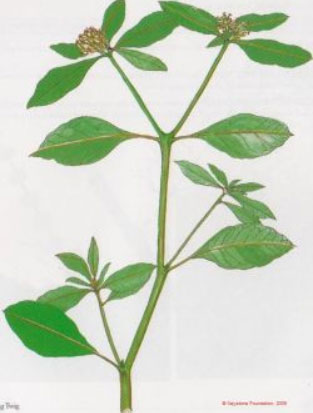
| Product Description: | A large woody vine. The leaves are from 7-10cm in length, somewhat oval in outline, and pointed at both ends. The flowers are fairly small, white, and occur in clusters. The fruits are very long and slender; the parts containing the seeds are swollen, while parts between the seeds are very narrow. The seeds are crowned with long, hair-like projections |
| NTFP Classification: |
DISTRIBUTION
| Countries Found: | Philippines |
| Description: | This species is common and widely distributed in the Philippines, and is one of the rubber-producing plants in the Archipelago |
USES AND PARTS USED
| Parts Used: | bark, bast |
| Uses: | The bark of this vine is used for making rope and for tying rice bundles |
| Origin: | |
| Management Practices: | |
| Market Information: | |
| Partners: | Bureau of Forestry, Philippines |
PARTNERS INVOLVED IN ACTIVITIES CONCERNING THIS NTFP
| Duration: | |
| Activity: | |
| External Links: |

