
Rattan PRODUCT NAME
Calamus viminalis Willd. SCIENTIFIC NAME
| Common Name: | Rattan |
| Local Name: | Cambodia: Phdao Krek (Phdao Kok, Phdao Lving, Tresh Sor, Phdao kantel). |
| Family: | Arecaceae (alt. Palmae) subfamily: Calamoideae tribe: Calameae subtribe: Calaminae. |
| Other Species of Same Genera: | |
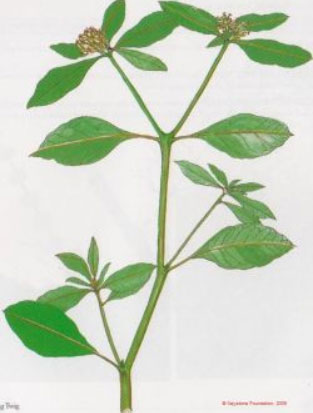
| Product Description: | Habit: clustering; climbing rattan; up to 35m long. Leaf sheath: 0.5-3cm diameter; green; young sheath with white cuticle, wearing off when mature. Sheath spines: sparsely to moderately dense spines up to ca. 4cm long; base crescent; flat; light orange-green; tip dark brown to black. Knee: conspicuous; knot-shaped; green; spines absent or present Climbing Organ: flagellum up to 300cm long. Leaf: 150-250cm long; petiole5-35cm long; rachis 150-210cm long; spines usually absent on upper and lower surfaces; sometime present; spine at margin to 3cm long. Leaflets indistinctly grouped of 20-30; each group with 2-7 leaflets, held in several planes; apical pair divided at base. Largest leaflets 11-35 x 0.7-1.5cm; base cuneate; margin sparsely bristly; apex narrowly acuminate; mid vein prominent; both leaflet surfaces sparsely bristly. Cane: 0.5-1.7cm diameter; internodes 10-30cm long. Inflorescence: 2-4m long; 2-7 partial inflorescences; female inflorescence 2-branched; male inflorescence 2-3-branched, with tiny rachillae and flowers; primary bract clasping peduncle; tubular; spiny. Fruit: 0.7-1 x 0.7-1cm; globose; perianth totally split; beak 0.1cm long; scale pale straw with dark grey margin. Seed not ruminate |
| NTFP Classification: | Crafts and furniture making |
DISTRIBUTION
| Countries Found: | Cambodia |
| Description: | Widespread across the country. This species prefers drier conditions than many rattans. It is found in semi-evergreen forest, mixed deciduous forest and on termite hills of deciduous dipterocarp forest. It seems to tolerate fire well. 50-500 altitude |
USES AND PARTS USED
| Parts Used: | other |
| Uses: | It is a moderately good species for handicraft and furniture making. A range of products made from this species includes basket handles, baskets, and mattresses. It is also used for walls and floors of bookshelves, beds, chairs, and sofas |
| Origin: | |
| Management Practices: | |
| Market Information: | 220-350 riel for a cane of 4-5m length. Its cane is extensively collected across the country for both domestic and international markets and thus this species is generally over-harvested |
| Partners: | WWF Greater Mekong – Cambodia Country Programme |
PARTNERS INVOLVED IN ACTIVITIES CONCERNING THIS NTFP
| Duration: | |
| Activity: | |
| External Links: |

